Planning to spend 3 days in Ubud but not sure what’s worth your time? I’ve been there!
Ubud has a lot going for it. But with so many temples, waterfalls, and rice fields to choose from, figuring out what to do—especially if it’s your first visit—can feel like a lot. That’s why I’ve put together this 3-day Ubud itinerary, based on multiple trips while living in Asia for 14 years.
In this guide, you’ll find a mix of must-see sights and quieter spots worth your time—like the Campuhan Ridge Walk, Tirta Empul Temple, and some of the most beautiful waterfalls near town. Whether you’re into nature, culture, or just want a slow-paced few days surrounded by rice terraces and jungle, this itinerary covers it.
I’ve also included practical tips on when to visit, where to stay, and how to get around—plus a few personal recommendations I think you’ll love. Feel free to tweak the plan to match your travel style.

Disclaimer: This post probably contains affiliate links. When you make a purchase through one of these links, I might receive a tiny commission at no extra cost to you. As an Amazon Affiliate I earn from qualifying purchases.
Quick Tips Before You Go
- Need a full Bali itinerary? Start with my 1-week Bali guide for all the must-see spots and practical planning tips.
- Looking for great eats? Here’s my guide to Ubud’s best restaurants.
- Chasing waterfalls? Don’t miss this list of the best waterfalls near Ubud.
- Not sure where to stay? Find the best hotels, villas, and hostels here, or read my full Ubud accommodation guide.
- Staying connected: Grab an eSIM for Indonesia here or pre-order a local SIM for delivery at your hotel.
- Getting in from the airport: Book a transfer to avoid the taxi scramble.
- Temple etiquette: Most temples require a sarong and sometimes a sash. You can usually rent one, but I recommend bringing your own. Here’s a good option.
- Want everything sorted for you? This guided Ubud tour includes all the main highlights—no planning needed.
- Need travel insurance? I personally use and recommend SafetyWing.
How to get to Ubud from Denpasar Airport
Ngurah Rai International (aka Denpasar Airport) is the main entry point to Bali, with taxis and buses heading out in all directions.
Ubud is about 38 km north of the airport, and the drive takes anywhere from 1 to 2 hours depending on traffic. You can take a taxi, bus, or private transfer—but honestly, the easiest way is to just book a transfer in advance. If your hotel doesn’t offer one, you can book a discounted ride here.
Travel Tip: There’s no direct bus to Ubud, so you’ll need to change buses along the way which is not the most convenient option IMO. If you’re taking a taxi, I suggest sticking to the official taxi counter at the airport to avoid getting overcharged.

How to get around Ubud
You can easily explore central Ubud on foot, but if you want to visit rice fields, waterfalls, and temples further out, you’ll need wheels. Here’s how to get around:
Scooter: This is my go-to way to get around. It’s cheap, gives you total freedom, and is great for short distances or spontaneous detours. That said, I only recommend renting a scooter if you’re confident driving one and have an international license. Some roads in Bali are a bit run-down and the traffic is no joke.
Private driver: If you’re not comfortable on a scooter (or just want to take it easy), hiring a private driver is a solid option. I’ve done this a few times, and it’s a super convenient way to get to all your stops without the stress of navigating. Most drivers offer 10-hour packages, so there’s loads of flexibility to plan your day exactly how you want.
Shuttle bus: I hate wasting time on transport, so I’ve never used the Kura Kura shuttle before. But if you’re looking for a budget way to get into town and not in a rush, this is a good option. The route runs past popular tourist spots and you can get 1, 2, or 3-day passes. Just keep in mind the travel times are longer and not all lines go through Ubud. See schedules here.
Taxis & ride-shares: Taxis in Ubud aren’t great. They’re overpriced, and some drivers will try to rip you off. Blue Bird is the most reliable operator—but honestly, I just use GoJek or Grab because you can see the price before you book.

Ubud Accommodation
There are loads of places to stay in Ubud, whatever your budget. If you want to explore on foot, stay near Ubud Market or the Palace. For a quieter spot, I recommend staying near the Monkey Forest.
I’ve written a full guide on where to stay in Ubud, but if you’re short on time, here are my top picks for this 3-day itinerary.
LUXURY: For a luxury stay near Ubud, it’s hard to beat Maya Ubud Resort & Spa. Just 30 minutes from town, this hillside resort overlooks a lush river valley and feels worlds away from the crowds.Expect Balinese-style villas, two pools, a spa, and those Instagram-famous floating breakfasts. Don’t skip the flower bath. Check rates or read reviews here.
AFFORDABLE LUXE: If you’re after a stylish stay without the steep price tag, Adiwana Unagi Suites is a solid pick. It’s less than 2 km from central Ubud, and offers spacious jungle-facing rooms and a peaceful garden setting. There’s also a pool, spa, yoga studio, gym, and even a mini golf course. Check availability & rates here.
MID-RANGE: Less than 1 km from the Art Market, Kano Sari Resort Villa is a great mid-range option that feels more luxe than its price suggests. The villa has six modern Balinese-style rooms, a peaceful garden setting, a pool with a bar, and friendly staff. Plus, you’ll find restaurants and shops just a short walk away. See rates or read reviews here.
BUDGET: A short walk from Ubud’s center, Desak Putu Putera is a great budget pick with clean, spacious rooms and a peaceful garden pool. I stayed here on my second trip to Bali, and yes—the banana pancakes at breakfast are as good as everyone says. See availability and rates here.
The Perfect 3 Days Ubud Itinerary—Quick Overview
Ubud sits right in the heart of Bali and is often called the island’s cultural, spiritual, and artistic hub. And once you go, you’ll get it. The town is surrounded by rice fields, jungle, waterfalls, and ancient temples—and it’s also home to some of Bali’s best yoga getaways. (If you’re wondering whether a wellness trip is for you, here’s a look at the benefits of yoga retreats and why they’re worth considering.
Even though Ubud’s one of the most visited places on the island, it has kept its traditional charm—making it a refreshing contrast to the party scenes in Kuta, Seminyak, and Canggu.
I’ve included a mix of cultural sites, outdoor adventures, and a few lesser-known spots in this itinerary. And while I recommend spending at least three days in Ubud—definitely stick around longer if you can.
Here’s a quick look at what’s covered:
Day 1: Wander along the Campuhan Ridge Walk, then explore Ubud’s colorful streets and temples by popping in at Ubud Palace, Ubud Water Temple, Ubud Art Market, and the Monkey Forest.
Day 2: Catch the sunrise atop Mount Batur, then head out to the Floating Water Temple and end the day relaxing at a Spa.
Day 3: Visit the iconic Tegalalang Rice Terraces and Puri Tirta Empul Temple, then cool off at Tegenungan Waterfall, and finally join a fun Balinese Cooking Class.

Day 1: Explore Ubud Center
Kick start your 3 days Ubud itinerary by exploring all the colorful streets of Ubud center. You’ll pass by temples, rice fields, bustling markets, and even a forest full of cheeky monkeys!
Just make sure you’re wearing comfy shoes. You’ll definitely be getting your steps in.
Campuhan Ridge Walk
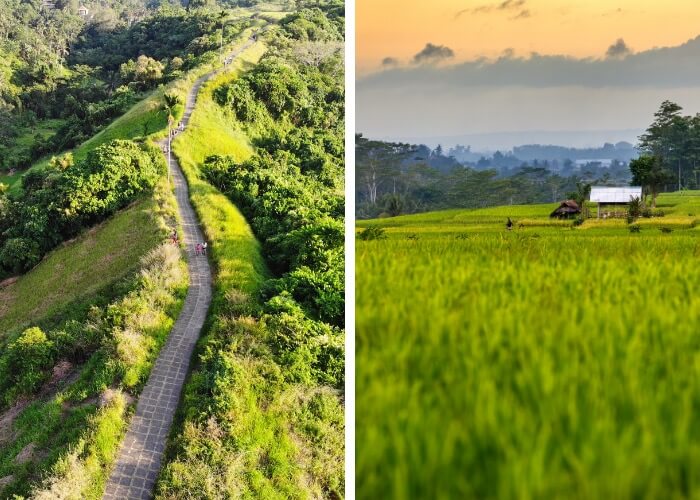
The first stop on your Ubud itinerary is the lovely Campuhan Ridge Walk. Don’t worry, it’s a very mellow hike and only takes about 1 hour tops. What makes it special is how quickly it drops you into Ubud’s incredible scenery with rolling hills, rice fields, and swaying palms all around you, which in my books is not a bad way to start the day.
If you’ve got time later on, come back—it’s one of the best sunset spots in Bali!
Visit the Ubud Palace
Next up, head over to the Ubud Palace, which is just around the corner from the Art Market. It’s one of those places everyone checks out, and while only a small part is open to the public, it’s still worth a look.
You’ll get a peek into what was once the royal family’s home, plus some beautiful traditional architecture and courtyard spaces. Since it is quite small, it can feel crowded quickly, so I recommend going early if you can.
If you’re not much of a morning person, come back in the evening to catch a Legong dance performance. Tickets are IDR 100,000 and the show starts at 7:30 pm. It runs for about 1.5hrs.
See Saraswati Temple
Just a short stroll from Ubud Palace, you’ll find Saraswati Temple—also known as the Water Palace. It’s one of Ubud’s most visited spots, and for good reason.
The temple is dedicated to Saraswati, the Hindu goddess of knowledge and arts, and features stunning architecture set around a tranquil lotus pond that’s hard to forget. It’s a peaceful spot, even with the crowds.
After exploring the grounds, I recommend grabbing a bite or a smoothie at Lotus Cafe, right in front of the temple. The view alone makes it worth the stop.

Go shopping at Ubud Art Market
No visit to Ubud is complete without a stop at the Ubud Market. It runs along Jalan Raya, just across from the Water Palace, and it’s one of my favorite spots to wander, hunt for souvenirs, and practice my haggling skills.
You’ll find everything from colorful handicrafts and bags to artwork, clothes, and all the usual Bali souvenirs. It’s busy—but fun, especially if you take your time.

Wander through the Ubud Monkey Forest Sanctuary
A visit to the Monkey Forest Sanctuary is one of those classic Ubud experiences—and one you definitely shouldn’t skip. It’s set in a lush bit of jungle with huge trees, mossy statues, and a few old Hindu temples, all right in the middle of town.
To be honest—you’re probably here for the monkeys. There are hundreds of cheeky macaques roaming around, and you’ll see them up close (maybe too close). It’s a fun stop for all ages and especially great if you’re traveling with kids.
Just be smart about what you bring—ideally nothing. These monkeys are pros at grabbing bags, sunglasses, snacks—basically anything they can! There’s a list of safety rules up at the entrance, so I definitely recommend giving it a quick read before you go in.
If you’re not visiting as part of a tour, make sure you’ve got cash. Tickets cost IDR 100,000 on weekdays and IDR 120,000 on weekends. For more deets on the forest’s opening hours, visit their website here.
Day 2: Hiking and Temples
On day two, you’ll want to get an early start to catch the sunrise. After that, head over to the floating temple for a quick wander, then wrap up the day the way I like best—with a proper pamper session at a nice spa.
Tackle the Mount Batur Sunrise Trek
If there’s one thing that should be on your Bali bucket list, it’s hiking Mount Batur. Yes, you’ll need to get up at some ridiculous hour (around 1–2 am), but it’s totally worth it—and easily one of the highlights of any Ubud itinerary.
Mount Batur is an active volcano about an hour from Ubud, and the sunrise views from the top are unreal. The hike itself takes about two hours and can be tough in parts, especially in the dark—but once you reach the summit, you’ll be glad you pushed through.
Expect panoramic views and (if you go with a guide) a simple breakfast at the top while the sun comes up. It’s a popular activity in Ubud and Bali, so there are lots of different tours available online. This is the tour I recommend.

Just a heads-up: I strongly advise only attempting this hike if you are confident in your hiking abilities and fit enough to do so. Also, wear sturdy footwear or even better hiking boots as the trail is rocky and slippery!
Visit Ulun Danu Beratan Temple
Next up is Ulun Danu Beratan Temple, also called Bedugul Temple—and honestly, it’s one of the prettiest temples I’ve visited in Bali.
It’s set right on the edge of Lake Beratan, with twin pagodas and mountains in the background. If you time it right and the lake’s full, the temple looks like it’s floating. We spent a good three hours just wandering the gardens and quiet courtyards—it’s a really peaceful spot to take your time.
Entrance is IDR 75,000, and it’s about 1.5 hours from Ubud. If you haven’t arranged a driver or tour yet, this small group trip also stops at Taman Ayun and Sekumpul Waterfalls.

Relax at a Spa
After a full day of exploring, it’s time to slow things down with a proper pamper session. Ubud has no shortage of dreamy spas, and it’s easy to treat yourself to a Balinese massage, facial, body scrub, or even a mani-pedi without breaking the bank.
For a real treat, I recommend booking a session at Radha Spa—it’s one of the best. Or check out a few more of my favorite like Svaha Spa Bisma, Chapung Wellness Spa, or Ubud Traditional Spa.
Day 3: Rice Terraces, Waterfalls, and Relaxation
Your final day in Ubud is all about nature and winding down. Start with a stroll through the rice terraces, stop by one of the waterfalls, and don’t miss the “holy water temple.” Then wrap up your day with a fun Balinese cooking class.
Wander around Tegalalang Rice Terrace
Tegalalang Rice Terrace is one of the prettiest places to visit in Ubud. But I will warn you, go early. This place is super popular so it can quickly feel touristy. Plus this way, you can avoid some of the heat.
The rice fields are seriously beautiful, and it’s a nice place for a stroll or a few photos. We grabbed a coconut and just hung out at one of the cafés overlooking the valley for a while—it’s a great way to slow down the pace.
Entry is IDR 20,000, and if you feel like doing something Instagrammy, you’ll find the Bali swing near here too.

Visit the Pura Tirta Empul Temple
Not far from Tegalalang, you’ll find Pura Tirta Empul, better known as the Holy Spring Water Temple. It’s a big one to tick off your list of things to do—it’s beautiful and deeply spiritual, but also always busy.
The temple has several pools fed by sacred springs, with sculpted fountains where locals and visitors line up to do the cleansing ritual. Honestly, I just enjoyed walking around, but if you want to take part one of the cleansing rituals you can book a temple tour with a purification ceremony—just double-check the process with your guide.
If you plan to go in the water, bring a change of clothes and a towel. You’ll also need a sarong to enter (you can rent one at the entrance if you forgot yours).
Entry is IDR 75,000, and the temple’s open from 8 am to 6 pm.

Swim at Tegenungan Waterfall
You can’t come to Ubud and not visit at least one waterfall—and Tegenungan is an easy favorite.
It’s about 15 meters high and a great spot to cool off, snap a few photos, or just hang out and take in the jungle views. If you’re looking for a quick dip and a nice break from the heat, this is definitely it.
Entrance is IDR 20,000, and like most places around Ubud, it’s best to go early before the crowds show up. If you’d rather go with a guide, this full-day tour includes the falls plus a few other good stops.
Travel Tip: Looking for something a bit more off-the-beaten-path? Then, don’t miss this Bali hidden waterfalls trip!

Join a Cooking Class
If you enjoy cooking—or just want to try something different—a Balinese cooking class like this or this is a great way to wrap up your time in Ubud.
You’ll learn how to make a few local dishes from scratch, pick out ingredients at the market, and get some insight into the history behind each recipe. The class runs about five hours and is honestly a lot of fun (plus, you get to eat everything you make).

More Options for 3 Days in Ubud
If you still have some free extra time in Ubud, here are a few more things worth checking out:
- Goa Gajah (Elephant Cave): A small temple just outside Ubud with unique carvings and a cave believed to date back to the 11th century. Don’t miss the elephant face at the entrance—it’s the highlight. This tour also includes Hidden Canyon and Tegenungan.
- Museum Puri Lukisan: A quiet little spot with traditional Balinese art and woodcarvings. Entry is IDR 50,000. Open 9 am to 6 pm. Grab your ticket here if you want to skip the line.
- Yoga at Yoga Barn: If you’re into yoga or just curious, this is one of the best places to try a class. You can book a session here.
- Neka Art Museum: A good mix of traditional and modern pieces—paintings, jewelry, textiles, and more. It’s worth a look if you’re into art.
- Gianyar Night Market: One of the best spots for cheap street food near Ubud, and a good place to find quirky souvenirs.
Best Time to Visit
Ubud’s weather is hot and humid year-round, like most of Bali. Since it’s up in the hills, it’s a bit cooler than the coast—but you’re still looking at temps in the high 20s to mid-30s°C most days.
The best time to go is during the dry season (May to September). July and August are peak season, so it gets busy, but there’s enough to see and do that it never feels too hectic.
Rainy season kicks off in October and runs through April, with the most rain falling in December to February. If you can, try to avoid those months—it’s not ideal for exploring when it’s pouring rain half the day.
Hope this itinerary (and all the tips!) helps you plan an epic trip to this beautiful part of Bali. Been to Ubud already? Drop your favorite spots, tips, or anything I missed in the comments—I’d love to hear what you got up to.
Pin this post!





Leave a Reply